

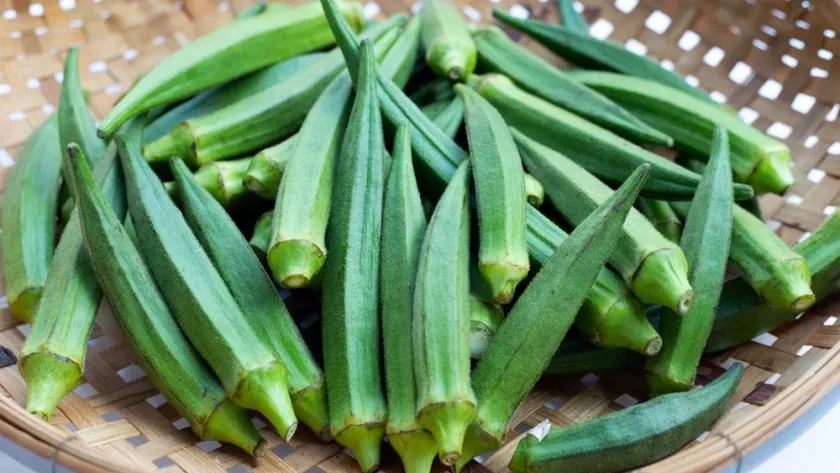
Known among Maldivians as lady’s finger, okra (Abelmoschus esculentus) is widely grown in tropical and subtropical regions around the world. Besides its culinary uses, it has long been used in traditional medicine to lower blood sugar, protect the body’s cells from damage and reduce inflammation.
With the number of people developing type 2 diabetes rising worldwide, and growing interest in plant-based treatments with low toxicity, extensive scientific research is now being conducted into okra as a beneficial food that can be used to control blood sugar.
The health benefits of okra pods, seeds and skin stem from their rich chemical composition. These include polysaccharides, polyphenols, flavonoids, vitamins and essential minerals needed by the body. The sticky substance in okra, or “mucilage”, is formed from polysaccharides containing special pectins (rhamnogalacturonan-I-type pectins). This substance slows the absorption of sugar into the bloodstream and helps maintain fluidity in the intestines.
Scientific analyses (HPLC analyses) show that the important phenolic compounds in okra include isoquercitrin, rutin and protocatechuic acid. These compounds have a powerful ability to neutralise harmful free radicals and regulate enzyme activity. Clinical studies have found that these bioactive compounds reduce oxidative stress in the body’s cells, protect against lipid peroxidation and improve the body’s response to insulin.
Evidence of okra’s role in helping control blood sugar:
Animal studies show that okra extract, its polysaccharides and its seed powder lower fasting blood sugar and improve insulin function. In addition, a study involving diabetic rats found that using okra extract increased bacteria beneficial to gut health and reduced bacteria that contribute to inflammation in the body.
Human clinical trials also confirm these benefits. A study conducted in 2023 found that taking 1,000 milligrams of okra powder three times a day for 12 weeks reduced fasting blood glucose (FBG), HbA1c and cholesterol levels.
Studies published in 2023 and 2024 show that consuming okra markedly lowers blood sugar. A 2025 study also confirms that, although it lowers blood sugar and HbA1c, it does not lead to a major change in body weight.
Overall, taking less than 3,000 milligrams of okra supplements a day provides substantial health benefits by lowering blood sugar and lipid levels.








Comments